

On our blog, we provide readers with information and advice about travelling in Wadi Rum and the rest of Jordan. We give tips about things to do, things not to do, transportation, Jordanian culture, and more in order to make sure guests in our country make the most of their time in our beautiful country.
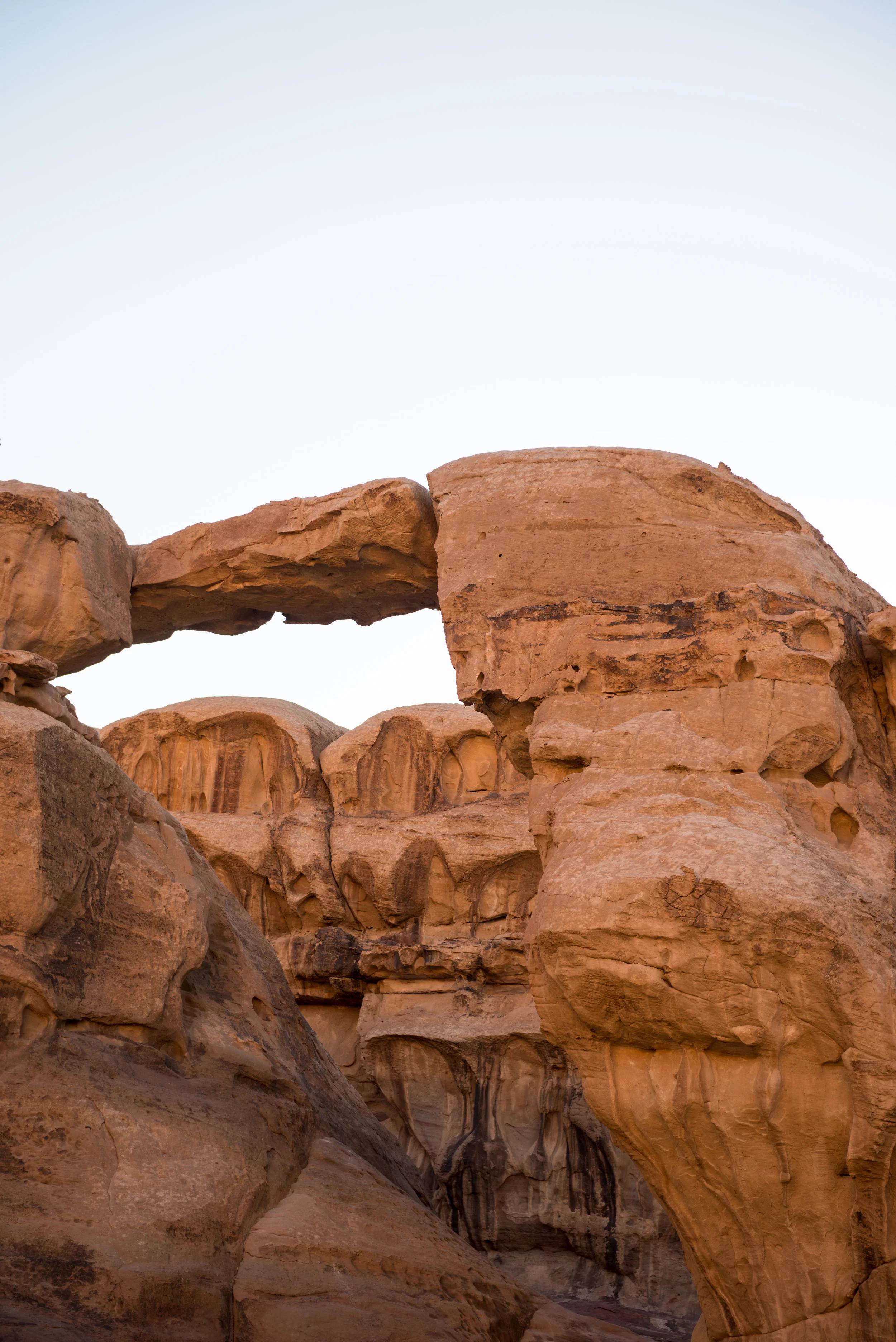
What the World is Saying About Wadi Rum (September 2019)
When reading about Wadi Rum online, you are bound to find countless travel blogs and social media posts detailing visitors’ experiences in our beautiful desert. While these are often great reads, they are certain to become repetitive the more you read. In this post, we’ve put together a collection of articles from across the internet which talk about Wadi Rum from different points of view.
When reading about Wadi Rum online, you are bound to find countless travel blogs and social media posts detailing visitors’ experiences in our beautiful desert. While these are often great reads, they are certain to become repetitive the more you read. In this post, we’ve put together a collection of articles from across the internet which talk about Wadi Rum from different points of view.
Arkadiusz Podniesiński finds an abandoned palace in southern Wadi Rum
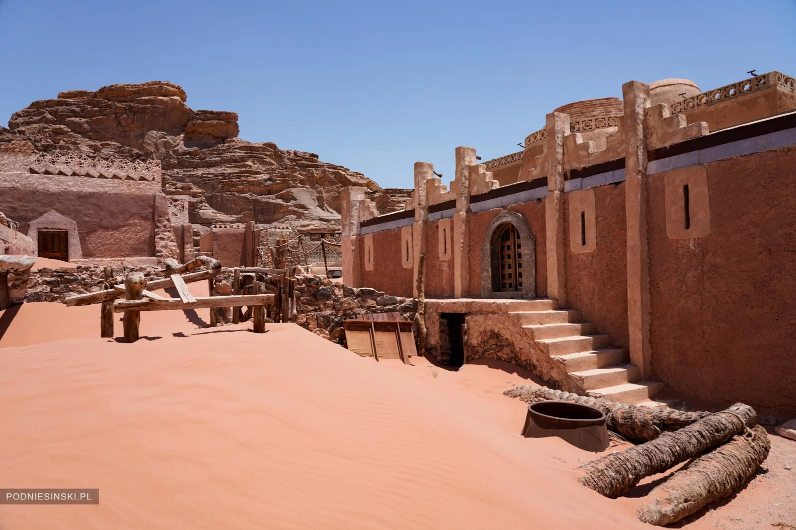
Photograph by ARKADIUSZ PODNIESIŃSKI from his article, “I Found an Abandoned ‘Palace’ in the Desert, It’s Actually a Gameshow Set” on PetaPixel.
The southern half of the Wadi Rum Protected Area is much more visited than the northern half. The village, camps, and most of the famous sites are located closer to the Protected Area’s northern border. As you travel south, you will find yourself feeling more and more isolated. The desert becomes silent, and sometimes you come across some strange things. This was especially true for Arkadiusz Podniesiński, a Polish photographer and filmmaker, who visited Wadi Rum this summer.
While exploring the southern, lesser-known part of the Jordanian desert Wadi Rum, I notice a remarkable, palace-like structure sitting on a high, rocky cliff. The view reminded me of a scene from the classic Oscar-winning film Lawrence of Arabia. It just lacked camel caravans and people.
Who lived in such a place and why did they decide to abandon it? Perhaps the abandoned structure was the set for a film I was unfamiliar with. The harsh background recalls those against which The Martian, Rogue 1, A Star Wars Story, Red Planet or Prometheus were filmed. My curiosity piqued, I headed closer.
The huge wooden gates won’t budge a millimeter, as if they intentionally do not wish to reveal the secrets lurking behind them. Luckily, the back of the complex isn’t fortified, making it easier to get inside.
What Podniesiński came across wasn’t an ancient fortress built by the Nabataens or the Bedouin. It was in fact a game show set which is now being overrun by sand as it slowly sinks below the surface. Inside he found trap doors, gates, crushers, and other strange devices. The palace certainly didn’t belong to any ancient civilization, but initially it left him with more questions than answers.
After a bit of research, he determined that the complex belonged to a game show set from the late 1990s. The Desert Forges (Les Forges du Désert in French) was a French game show broadcast on France 2 in 1999 and 2000. Six episodes were produced however only three were broadcast due to poor viewership. That wasn’t the end of the palace however. British and Quebecois versions of the show were produced and shown in 2001 and 2002. You can watch the intro to the British version below. .
You can read the full article and view some great photos of the abandoned TV set on PetaPixel by clicking here.
Locals are Using an App to Document Ancient Inscriptions
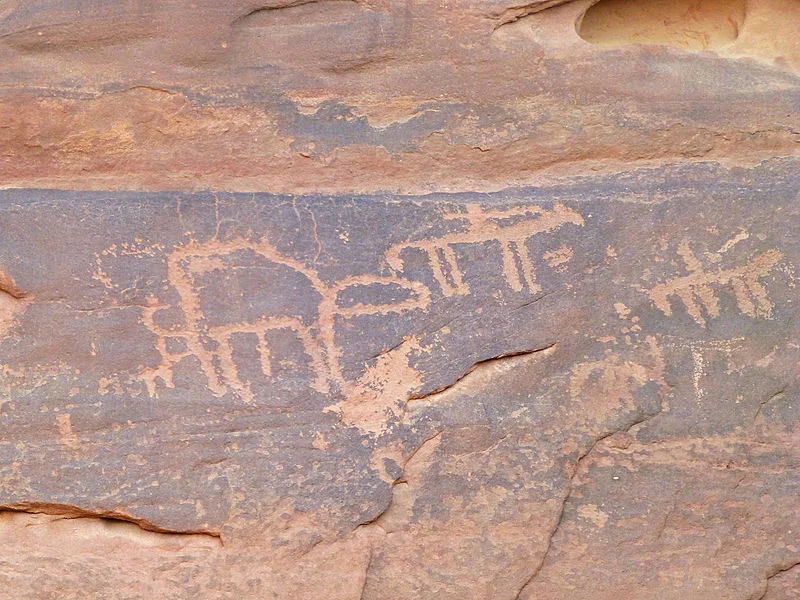
Photograph by Ji-Elle, shared under a CC BY-SA 4.0 license.
The Wadi Rum Protected Area is absolutely full of rock art; petroglyphs and ancient inscriptions. UNESCO estimates that there are over 25 000 petroglyphs and 20 000 inscriptions in the Protected Area. Atlas Obscura, a website that writes articles about lesser known or off the beaten path things to see and do around the world, published an article about how the locals in Wadi Rum are using a new technique to preserve their heritage through documenting this rock art.
An app has been developed which allows the local people based in Wadi Rum and the nearby areas to catalog the rock art that they come across using their smart phones. The article explains:
Here’s how it works. You find a rock art panel, and then make a sketch or take a photograph of it while noting its GPS coordinates. You then have a list of 36 different rock-decay forms you have to identify, scoring them between a zero (no damage) and a three (this type of damage dominates the rock panel). Extra detail on the quality of the panel and what it shows is permitted. In order to erase bias, you can get multiple people to judge the same rock art panel and average out their scores.
You can read the full article on Atlas Obscura by clicking here. If you are interested in seeing more rock art during your time in Wadi Rum, please let us know. We are happy to tailor our tours to meet our guests’ wishes.
National Geographic lists Wadi Rum as one of the Earth’s Top 10 most Alien Landscapes
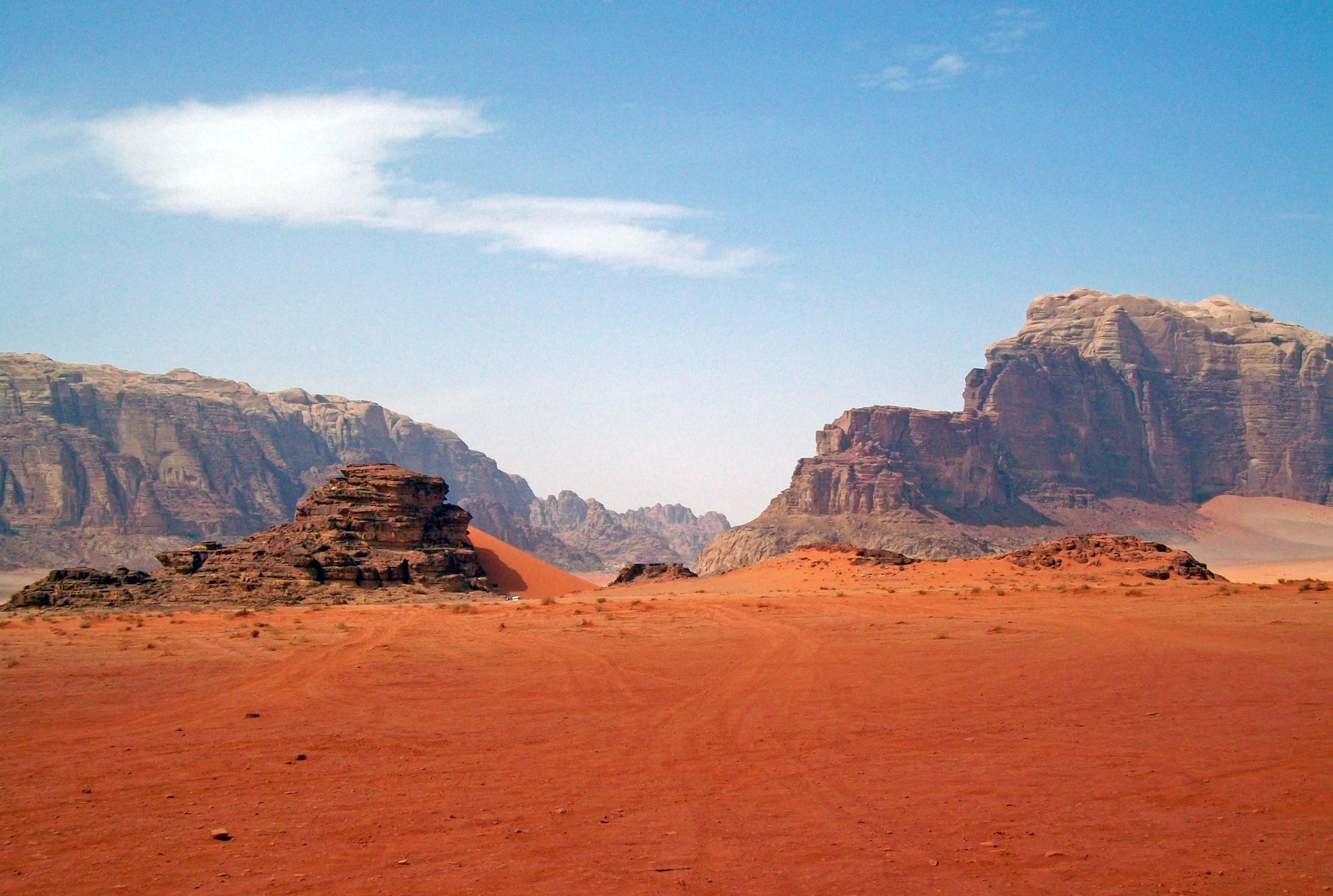
Photograph by Daniel Case, shared under a CC BY-SA 3.0 license.
The fact that Wadi Rum looks like Mars shouldn’t be surprising to anyone. It’s often one of the reason why people are drawn to Wadi Rum in the first place. Its landscapes are a photographer’s paradise and several films (such as The Martian) have been shot in Wadi Rum due to its resemblance to the red planet. It therefore comes as no surprise that Wadi Rum was listed in National Geographic’s list of Earth’s 10 Most Alien Landscapes.
Other locations making the list were the Danakil Depression in Ethiopia, Salar de Uyuni in the Bolivian Andes, and the Borup Fiord Pass in Northern Canada. You can see all of National Geographic’s photo galleries by clicking here.
An experimental festival descends on Wadi Rum
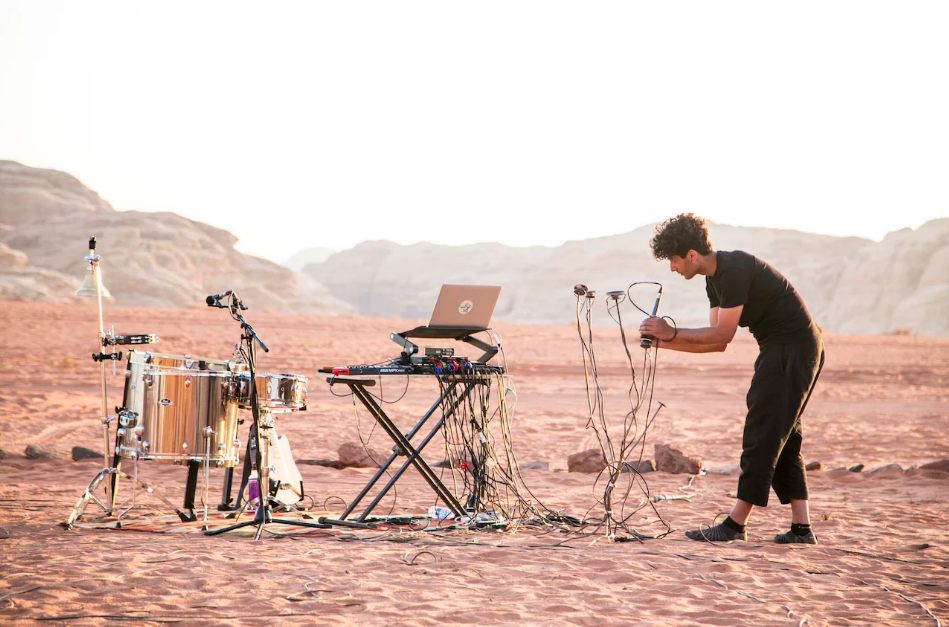
Photograph taken by Mohammed Zakaria.
This past June, a collection of artists from all around the Arab World gathered in Wadi Rum for Sarāb 2019. Jordan was chosen as the location as it is the easiest country for Middle Eastern passport holders to visit without any visa headaches. Over 150 people were able to make the trip to Wadi Rum for what organizers hope to turn into an annual event.
The author, Tom Faber, explains:
Sarāb means "mirage" in Arabic, a gesture to the transience of a music festival in the wilderness. The site overlooked a rust-coloured plain, with a dance floor of sand strewn with Bedouin-style carpets. The desert infused every act with its ancient aura, but some of the best performers actively used the land in their live sets. First was Nicolas Jaar, who sat on the ground and live-looped the sound of dancer Stéphanie Janaina raking stones across the sand. He used that scrape and metallic thud as a percussive backdrop for half the set, adding eerie washes of melody that rose like a ghostly choir. Janaina flexed as if fighting paralysis, and at one point Jaar winced—perhaps overcome by the harsh tones he was conjuring, or maybe because sand was flying in his face.
You can read Tom’s full article on Resident Advisor by clicking here.
Will Smith Discusses his Wadi Rum Experience

This spring, Disney released an live action adaptation of their 1992 animated film which is considered a classic by Disney fans around the world. The story is based on a tale from One Thousand and One Nights, a famous collection of Arabic folk tales from the Islamic Golden Age. The film stars Mena Massoud as Aladin, Naomi Scott as Princess Jasmine, and Will Smith as the Genie. A significant amount of the film was shot in our very own Wadi Rum Desert.
The Jordan Times interviewed Smith before the film premiered in Amman to ask him about his time in the desert. Here are a few quotes:
“For me it was absolutely spectacular,” Smith, who plays the Genie in the 2019 picture, told reporters during a press conference in Amman on Monday, attended by the film’s cast and director.
The film, parts of which were shot in Jordan’s Wadi Rum last year, will be screened in the Kingdom on May 23.
“What happens with actors when [they] travel to locations, [is that] everything changes inside of you. When we landed in Jordan, all of a sudden you begin to embody the feelings of the characters,” the Hollywood star told the press.
You can read the full article, including quotes others involved with the production of the film, by clicking here.
Wadi Rum Nature Tours offers tours and accommodation in the Wadi Rum Desert, a UNESCO World Heritage Site in the south of Jordan. If you are planning a trip to Jordan, click here to read about our tours and our accommodation in beautiful Wadi Rum.

50 Things To Do in Jordan
In no particular order, we’ve come up with fifty things to do on your trip to Jordan. We’ve tried to come up with a good mix of adventurous activities, culinary experiences, interesting historical encounters, and more. Some of these activities are almost certainly already apart of your Jordanian itinerary whereas others are more off the beaten path.
In no particular order, we’ve come up with fifty things to do on your trip to Jordan. We’ve tried to come up with a good mix of adventurous activities, culinary experiences, interesting historical encounters, and more. Some of these activities are almost certainly already apart of your Jordanian itinerary whereas others are more off the beaten path. If you have a suggestion for something that should be included on the list, please send us a note to let us know!
50 Top Experiences in Jordan
#1
Climb Jabal Umm ad Dami, Jordan’s highest peak.

View from the top of Jabal Umm ad Dami, Jordan’s highest peak. Photo taken by Roupicou, distributed under CC BY-SA 4.0 license.
#2
Eat mansaf, the national dish of Jordan.

Traditional Jordanian mansaf. Photo taken by Evan Carroll, distributed under CC BY-SA 4.0 license.
#3
Visit the Amman Citadel at sunset and listen to the call to prayer echo across the city.

The Amman Citadel. Photo taken by Davric, distributed under under CC BY-SA 4.0 license.
#4
Stop and have a rest at Amman’s Roman Theater which is over 1800 years old.

The Roman Theater in Amman. Photo taken by Bernard Gagnon, distributed under CC BY-SA 4.0 license.
#5
Hike from Little Petra to Petra.

Little Petra. Photo taken by Orionis.
#6
Walk on the Jordan Trail.

The Jordan Trail is a long distance hiking path that starts in the north of Jordan at Um Qais and finishes at the Red Sea near Aqaba.
#7
Go sandboarding in Wadi Rum.

Slide down some of the steepest dunes in Wadi Rum on a sand board. You can try sand boarding during our Wadi Rum Jeep Tour.
#8
Go diving in the Red Sea near Aqaba.

Aquatic life in the Red Sea near Aqaba. Photo taken by Joi Ito, distributed under CC BY 2.0 license.
#9
Sleep under the stars in Wadi Rum.
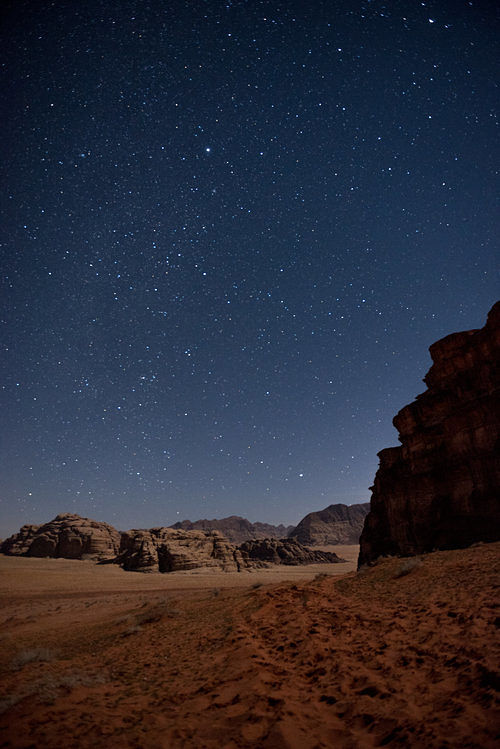
For all of our tours, you can decide to sleep under the stars in the open air beneath the starry desert sky.
#10
Explore the Umayyad Palace on top of Jabal al-Qal'a, Amman’s Citadel Hill.

The Umayyad Palace in Amman. Photo taken by Tonitech, distributed under CC BY-SA 4.0 license.
#11
Eat zarb, a tasty Bedouin dinner cooked beneath the sand.

Our chef Hassan clearing the sand away from the pit where zarb is cooked. Photo taken by Matthew Cruickshank, @mfcruickshank on Instagram.
#12
Take a day trip to Qasr Amra, one of the best known desert castles.

Frescoes inside Qasr Amra. Photo taken by David Bjorgen, distributed under CC BY-SA 4.0 license.
#13
Check out Qasr Azraq, a desert castle built by the Romans, used by the Ottomans, and Lawrence of Arabia’s desert headquarters in 1917.

Qasr Asraq. Photo taken by Teo Gomez.
#14
Have a relaxing float in the Dead Sea.
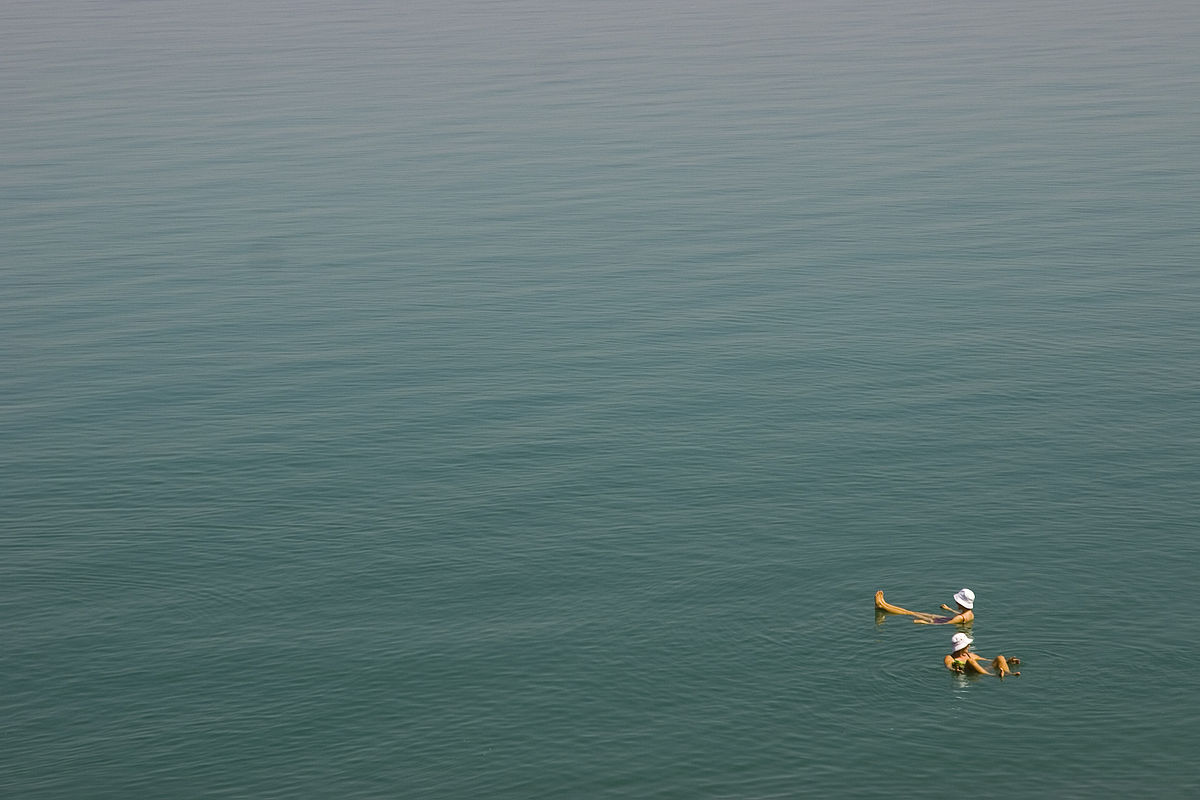
Floating in the Dead Sea. Photo taken by Audrey Sel, distributed under CC BY-SA 2.0 license.
#15
Tour Bethany Beyond the Jordan, the baptism site of Jesus Christ by John the Baptist.

The baptismal site of Jesus Christ. Photo taken by Faraheed, distributed under CC BY-SA 4.0 license.
#16
Summit Mount Nebo for a panoramic view over the Holy Land.

Mount Nebo. Photo taken by Berthold Werner, distributed under CC BY 3.0 license.
#17
Visit Wadi Mujib and go canyoning in the Mujib Nature Reserve.

Hiking trail in Wadi Mujib. Photo taken by Hiking In Jordan, distributed under CC BY-SA 3.0 license.
#18
Learn about the biodiversity and rare species in the Dana Biosphere Reserve.

A Palestine Sunbird in the Dana Biosphere Reserve. Photo taken by Charles J Sharp, distributed under CC BY-SA 4.0 license.
#19
Go for a nature walk in the Dibeen Forest Reserve near Jerash.

Dibeen Forest Reserve. Photo taken Ldud, distributed under CC BY-SA 3.0 license.
#20
Try birdwatching in the Ajloun Forest Reserve.

A Sardinian Warbler in the Ajloun Forest Reserve. Photo taken by Andreas Trepte, distributed under CC BY-SA 2.5 license.
#21
Visit the Madaba Map mosaic which depicts Jerusalem and the layout of the Holy Land in the 6th century.

A section of the Madaba Map mosaic. Photo taken by Jean Housen, distributed under CC BY-SA 3.0 license.
#22
Visit the remains of several Byzantine churches at the Madaba Archaeological Park.

A church in the Madaba Archaeological Park. Photo taken by Freedom’s Falcon, distributed under CC BY-SA 3.0 license.
#23
Take a journey to Umm ar-Rasas and admire the mosaic floor at the Church of Saint Stephen.

A section of the mosaic floor at Umm ar-Rasas. Photo taken by xorge, distributed under CC BY-SA 2.0 license.
#24
Spend an evening sampling the street food in Amman.

Street food in Amman. Photo taken by yeowatzup, distributed under CC BY 2.0 license.
#25
Stop at an arabian bakery and try their baklava.

Trays of fresh baklava. Photo taken by E4024, distributed under CC BY-SA 4.0 license.
#26
Try kanafeh, and try not to drip any syrup on your shirt.
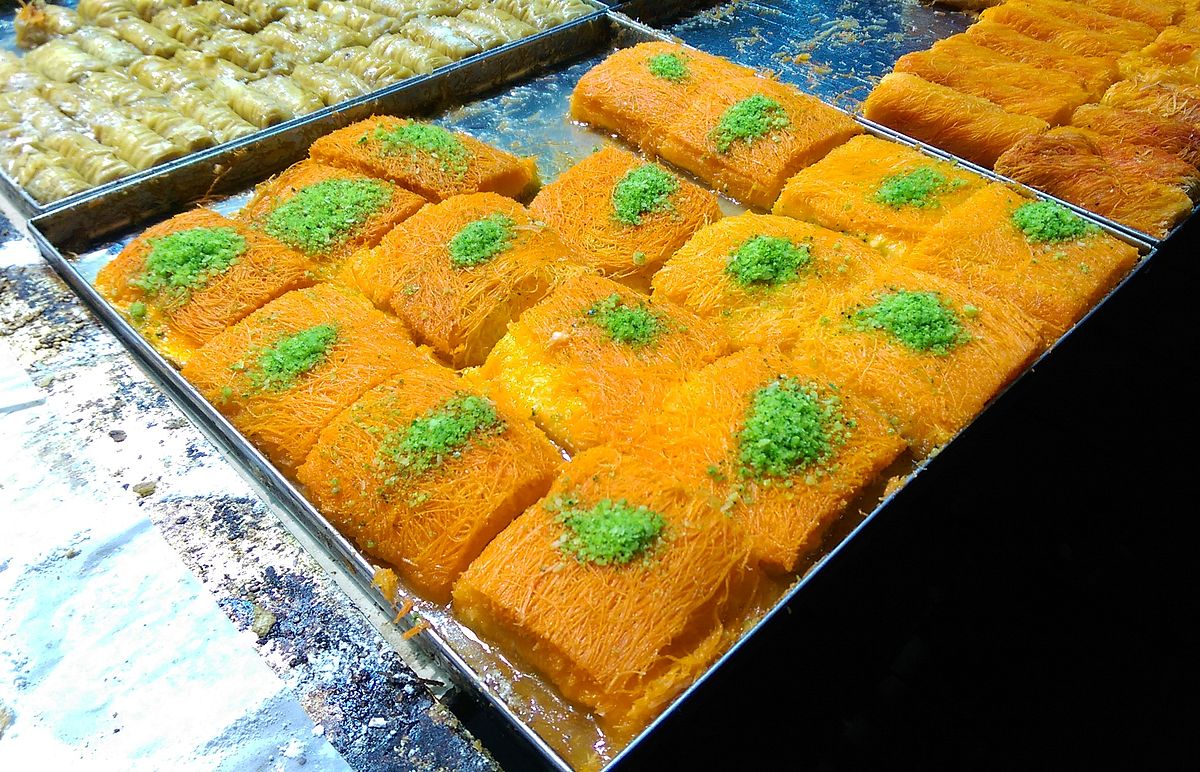
A tray of fresh kanafeh. Photo taken by Maor X, distributed under CC BY-SA 4.0 license.
#27
Sample many local dishes by ordering a mezze.
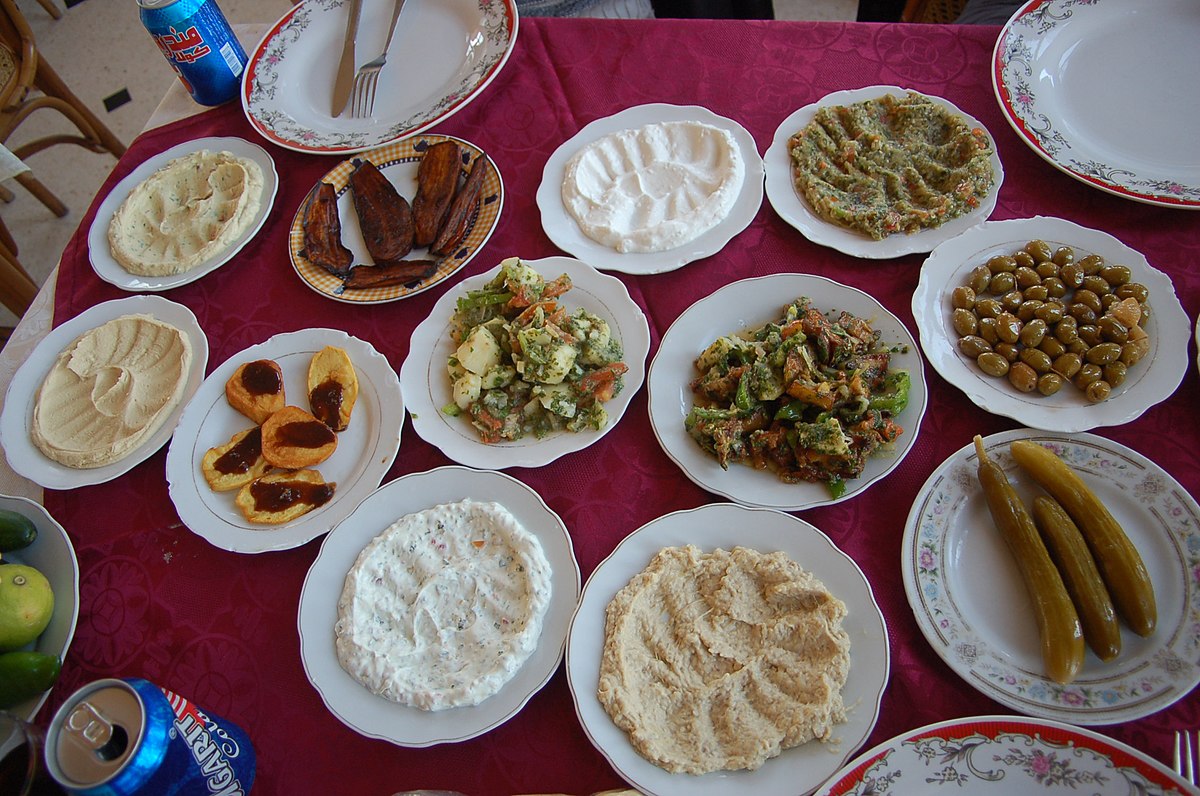
A typical mezze. Photo taken be Dan, distributed under CC BY-SA 2.0 license.
#28
Try Arabic coffee, prepared with coffee beans and cardamom, served in a traditional Arabic coffee pot.

Preparing arabic coffee. Photo taken by Mervat Salman, distributed under CC BY-SA 3.0 license.
#29
Get addicted to tasty Bedouin tea, the perfect blend of black tea, sage, and sugar.

Preparing Bedouin tea next to the fire. Photo taken by Rob Oo, distributed under CC BY 2.0 license.
#30
Try the different varieties of locally grown dates.

Dates at the market. Photo taken by Noblevmy, distributed under CC BY 3.0 license.
#31
Mix our delicious, locally produced olive oil with your zaatar, labneh, and hummus.

Old olive trees in Jordan.
#32
Hum the Indiana Jones theme song as you exit the Siq and see the Treasury at Petra for the first time.

Your first glimpse of the Treasury. Photo taken by David Bjorgen, distributed under CC BY-SA 3.0 license.
#33
Sit and enjoy the sunset near the Monastery at Petra.

The Monastery at Petra. Photo taken by Brad Mering.
#34
While visiting Petra, follow the trails to the High Place of Sacrifice.

View from the High Place of Sacrifice. Photo taken by LiAnna Davis, distributed under CC BY-SA 3.0 license.
#35
Ride an Arabian Camel in the desert.

An arabian camel in Wadi Rum. Photo taken by Jorge Lascar, distributed under CC BY 2.0 license.
#36
Take a stroll down Rainbow Street in Amman.

Rainbow Street in Amman on a quiet morning.
#37
Learn about Jordan’s long history at The Jordan Museum in Amman.

A display demonstrating the evolution of writing systems in Jordan. Photo taken by Davide Mauro, distributed under CC BY-SA 4.0 license.
#38
Make a stop at Falafel al-Quds on Rainbow Street in Amman to see if the ‘best falafel in the Middle East’ lives up to its reputation.

Al Quds Falafel in Amman.
#39
Take a walk down The Cardo, a 600m collonaded street at the ruins of Jerash.

The Cardo at Jerash. Photo taken by Jean Housen, distributed under CC BY 3.0 license.
#40
Climb the stairs of the impressive Temple of Artemis at Jerash.

The Temple of Artemis at Jerash. Photo taken by Jean Housen, distributed under CC BY 3.0 license.
#41
Visit the Ajloun Castle, a Crusades-era construction with panoramic views over the Jordan Valley and the north Jordan highlands.

The Ajloun Castle. Photo taken by Hiking in Jordan, distributed under CC BY-SA 2.0 license.
#42
Visit the Citadel of Kerak, a former Crusader stronghold later conquered by Saladin.

Kerak Castle. Photo taken by Dosseman, distributed under CC BY-SA 4.0 license.
#43
Get off of the beaten path and go hiking in Wadi bin Hammad.

Tiny waterfall in Wadi bin Hammad. Photo taken by Majdiq, distributed under CC BY-SA 3.0 license.
#44
Explore the ruins of the Shobak Castle, perched atop the former hill known as Montreal (Royal Mountain).

Shobak Castle. Photo taken by xorge, distributed under CC BY-SA 2.0 license.
#45
While in Aqaba, try a glass of Jordanian Arak, a traditional flavoured liquor made from anise.

Arak, when mixed with water, becomes cloudy and white. Photo taken by Mica.
#46
Wake up early and go for a hot air balloon ride in Wadi Rum.

View over Wadi Rum from the hot air balloon. Photo taken by Anark75, distributed under CC BY-SA 3.0 license.
#47
Take a day trip to the roman ruins of Umm Qais and enjoy the view over the Sea of Galilee and the Golan Heights.

An ancient street in Umm Qais after the rain. Photo taken by xorge, distributed under CC BY-SA 2.0 license.
#48
Explore the ancient ruins of Pella in the Jordan River Valley.

Pella. Photo taken by IGEO Map, distributed under CC BY-SA 4.0 license.
#49
Stop in at the city of Salt, the capital of Jordan under Ottoman rule.
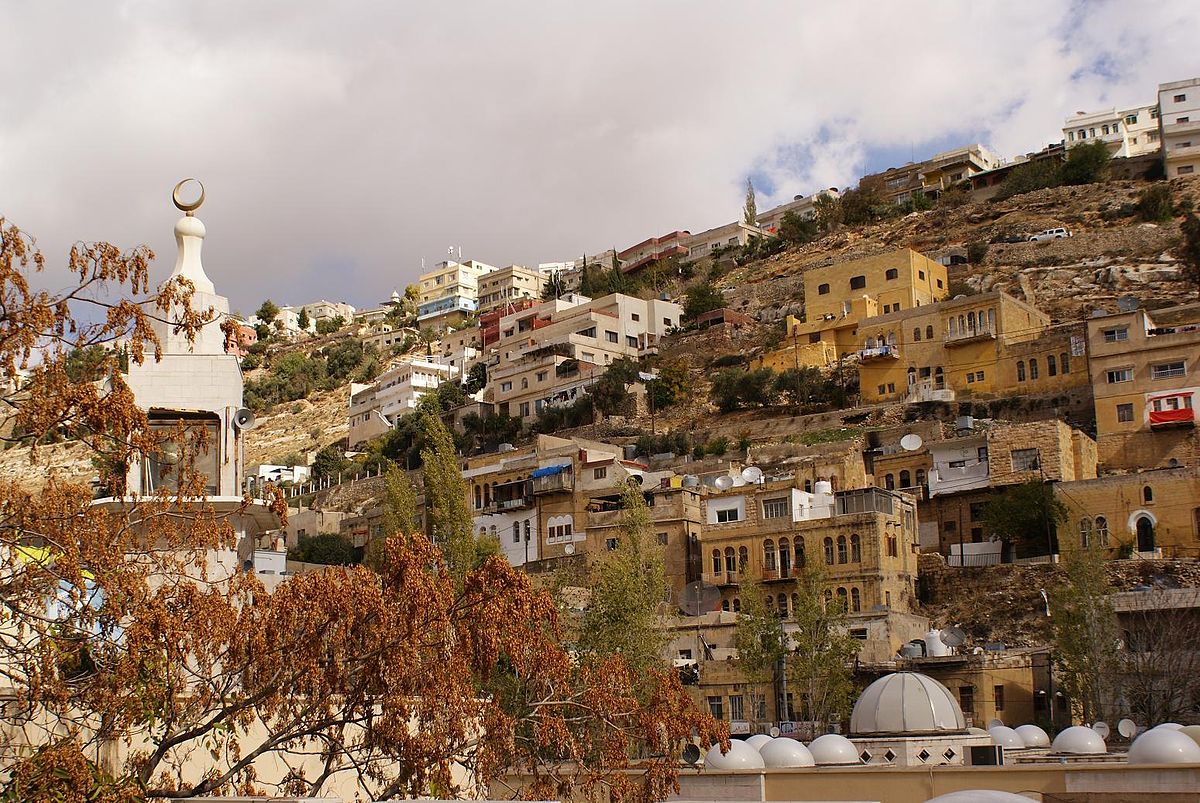
Salt (or As Salt), Jordan’s former capital.
#50
Do a Jeep Tour with Wadi Rum Nature Tours.
We had to finish this list with our most popular tour, our Wadi Rum Jeep Tour - One Day and One Night. We hope to see you soon in Wadi Rum!

One of Wadi Rum’s many beautiful landscapes. Photo taken by one of our guests, Simon Walser, @walser.simon on Instagram.
Wadi Rum Nature Tours offers tours and accommodation in the Wadi Rum Desert, a UNESCO World Heritage Site in the south of Jordan. If you are planning a trip to Jordan, click here to read about our tours and our accommodation in beautiful Wadi Rum.
Jordan’s UNESCO World Heritage Sites
There are five UNESCO World Heritage sites in Jordan; four of the sites are considered cultural sites and the fifth is a mixed site, qualifying as both a natural and a cultural site. In this post, we’ve written a little bit about what makes each site special as well as how to get to the site.
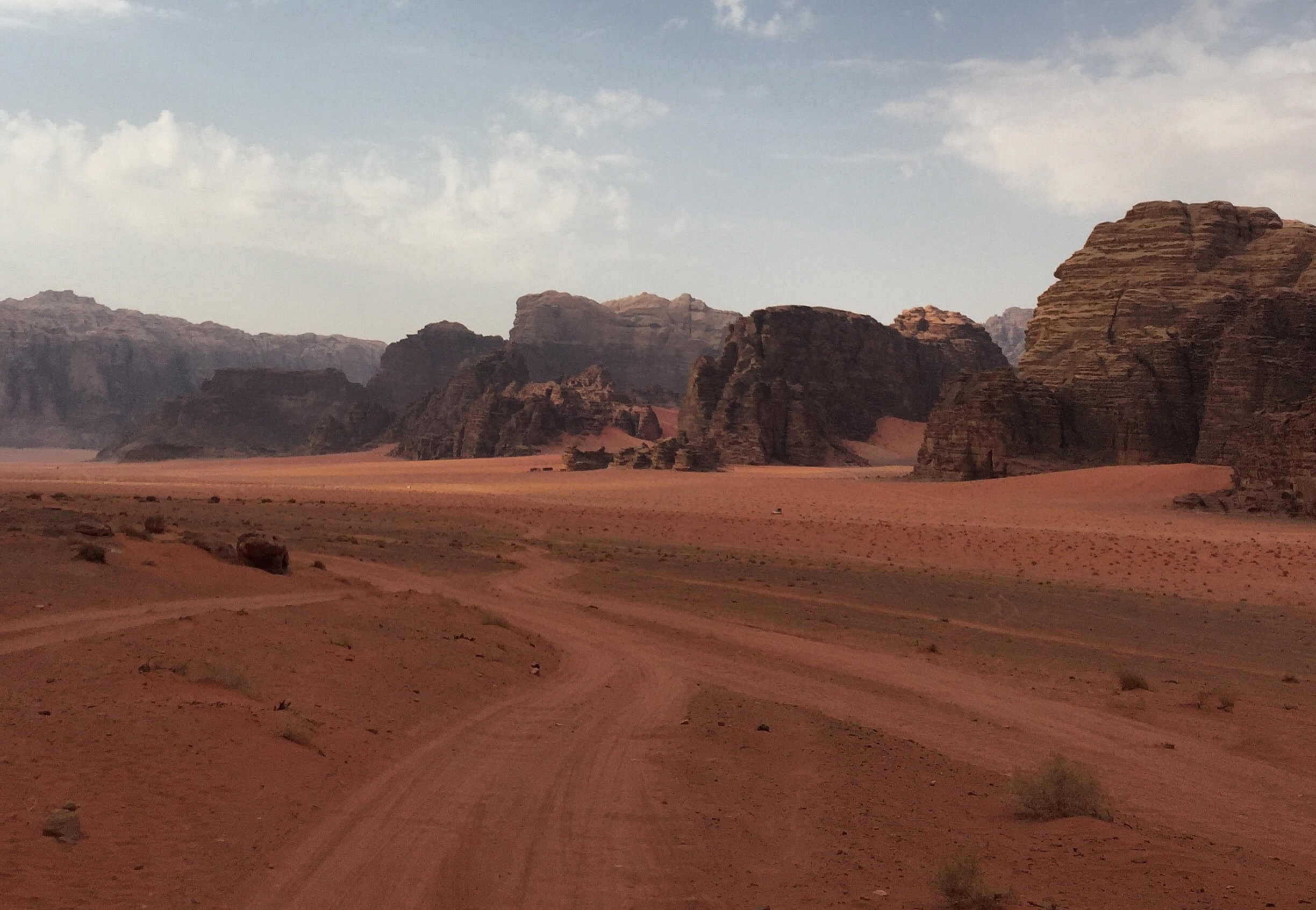
The Wadi Rum Protected Area, a UNESCO World Heritage Site in the south of Jordan. Photo taken by Jurick Wessels, @jurickwessels on Instagram.
There are five UNESCO World Heritage sites in Jordan; four of the sites are considered cultural sites and the fifth is a mixed site, qualifying as both a natural and a cultural site. In this post, we’ve written a little bit about what makes each site special as well as how to get to the site. If you have any questions, or if you’ve visited the site already and you want to share some tips for future visitors, please send us a message.
Petra

Petra’s Treasury after dark. Photograph by Mustafa Waad Saeed, distributed under CC BY-SA 4.0 license.
What is it?
The ancient city of Petra is the most popular tourist destination in Jordan and it was named a UNESCO World Heritage Site in 1985. What makes Petra stand out is the ancient tombs which were carved out of the sandstone rock formations when Petra was a thriving city and center of trade between Arabia, Egypt and Syria-Phoenicia, whose merchants carried goods from all over Africa and Eurasia. The most famous sites at Petra are known as The Treasury and The Monastery.

The Monastery at Petra. Photograph by Tom Neys.
The Treasury is Petra’s most famous tomb due to its size, location, state of preservation, and appearance in popular culture. In film, The Treasury is most well-known for its appearance as the entrance to the temple housing the Holy Grail in Indiana Jones and the Last Crusade. Some visitors to Petra are surprised to learn that the inside of the tombs are architecturally uninteresting. Although you aren’t permitted to enter The Treasury, you can enter other tombs and have a look around. The name ‘The Treasury’ comes from the belief that the urn at the top contains an ancient treasure. Groups have tried to access the loot by shooting through the urn however scans have shown it to be solid sandstone. If you look closely, you can see the damage caused by the bullets.
The Monastery is an extremely impressive architectural site, especially at sunset. The Monastery is a bit far from from the Treasury and even further from the Visitor Center. If you are planning to visit the Monastery (which you should!), consider wearing good walking shoes. There are many other lesser known but interesting and beautiful sites to explore at Petra. Make sure you leave enough time to visit most of them. Too many visitors leave only enough time to visit The Treasury but you could easily spend two days covering the entire site.
How do I get there?
Due to its popularity, it is quite easy to get to Petra from anywhere in Jordan. Petra is located next to the town of Wadi Musa in the south of Jordan, along the King’s Highway. From Wadi Rum, there is a tourist bus that departs each morning around 9:00 AM and travels to Wadi Musa. The cost is 8 JOD per passenger (Oct 2018). If you want go to Petra later in the day, a taxi from Wadi Rum to Amman costs 40 JOD. From Aqaba, you can take the tourist friendly JETT buses, the cheaper local mini-buses, or arrange a taxi for around 60 JD.
Bethany Beyond the Jordan

What is it?
Bethany Beyond the Jordan, also known as Al-Maghtas is believed to be the location where Jesus of Nazareth was baptized by John the Baptist. It was named a UNESCO World Heritage Site in 2015. This site is located in the Jordan Valley, to the east of the Jordan River. It is about 9 km from the coastline of the Dead Sea. The site is split into two areas; (1) Tell Al-Kharrar and (2) and the area close to the river where the churches of Saint John the Baptist were located.

Russian President Vladimir Putin visiting Bethany Beyond the Jordan (Photo: kremlin.ru)
Tell Al-Kharrar, also known as Jabal Mar-Elias (Elijah’s Hill), is thought to be the location of Elijah’s ascension as described in the Hebrew Bible. As the story goes, Elijah was a prophet and was not on good terms with King Ahab in Israel. When Elijah grew old he, along with his successor Elisha, decided to leave Israel and settle in modern-day Jordan. Upon arrival at the Jordan River, Elijah parted the waters with his cloak allowing them safe passage. Once they reached the other side, a fiery chariot is thought to have swooped down and carried Elijah to Heaven.
Jesus of Nazareth is thought to have travelled from Nazareth to come to John to be baptized. Despite John’s initial objections, he agreed to baptize Jesus at Bethany Beyond the Jordan. Ever since, this historical and spiritual site has been a popular place for pilgrims, hermits, and monks to reside. During the Six Day War in 1967, the site became off limits to pilgrims due to both banks of the Jordan River being militarized. In 1994, Prince Ghazi of Jordan restored access to the site. Ever since, it has been a popular site for pilgrims, tourists, and archaeological investigations. In 2000, Pope John Paul II became the first pope in history to visit the site. Since then, Pope Benedict XVI and Pope Francis have both visited the site along with many world leaders and members of royal families including Vladimir Putin and Prince Charles of the United Kingdom.
How do I get there?
Bethany Beyond the Jordan is close to the Dead Sea and thus it is best to combine a visit to both sites. Buses travel between the Dead Sea resort area to this site each day. If you are not intending to stay in the area, this UNESCO site is not too far from Amman and a taxi can be hired for a reasonable price. Further, Bethany Beyond the Jordan is not far from the Allenby Bridge Border Crossing which connects Jordan with the Israeli city of Jericho. Free entry to Tell Al-Kharrar is included with the Jordan Pass.
Quseir Amra
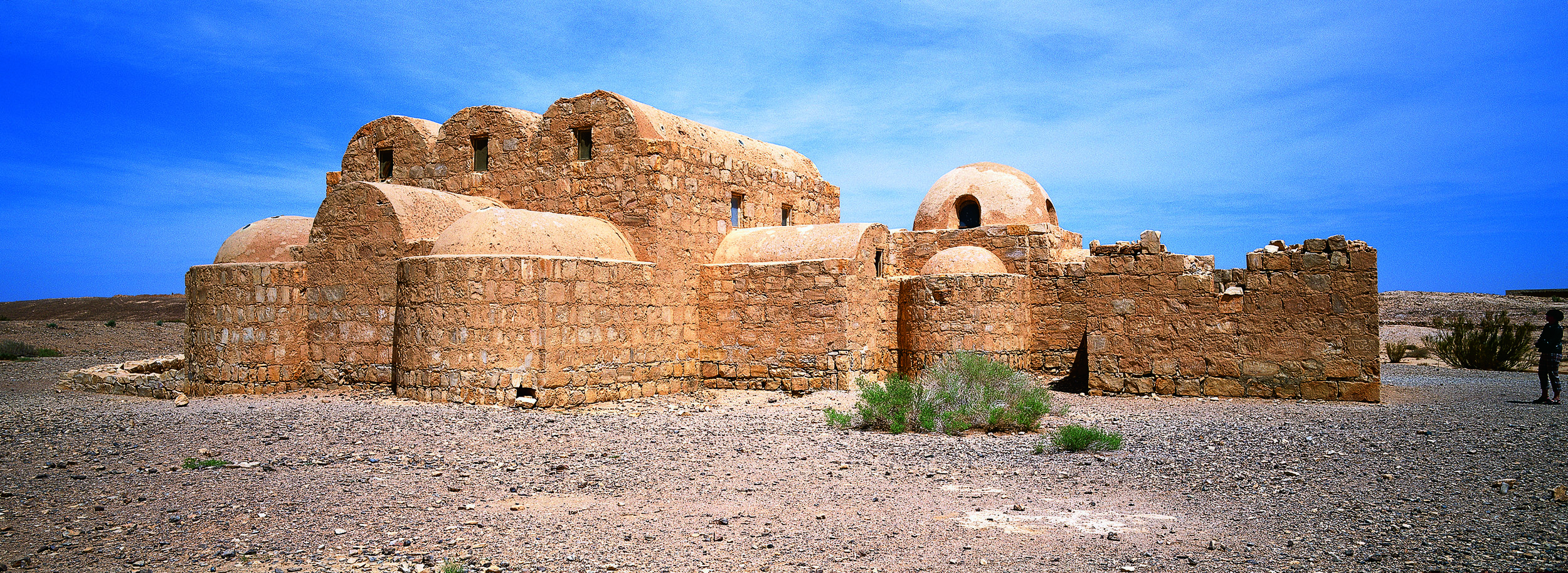
Quseir Amra. Photograph by JoTB, distribute under CC BY-SA 3.0 license.
What is it?
Quseir Amra is a fortress built by the Ummayads in the 8th century. It is one of Jordan’s five desert castles, all of which are located in the remote, north-eastern part of the country. Today, very little of the castle remains but luckily, Quseir Amra was not only used as a military post. The Ummayad caliphate had built what is known as a ‘pleasure-palace’ which today remains very well preserved.

Animal playing a stringed instrument at Quseir Amra. Photo taken by Simon Bowden, @sj_bowden on Instagram.
Inside the Pleasure Palace, you can see frescoes painted on the walls which depict hunting scenes, animals and birds, and inscriptions in both Arabic and Greek. In the apodyterium (the changing room) you can see an interesting painting with animals playing musical instruments and engaging in other human activities.
Quseir Amra was abandoned when it was rediscovered by the Czech explorer Alois Musil in 1898. Although you may want to thank him for the discovery, you may want to reconsider. He tried to steal one of the most important paintings inside known as the Painting of the Six Kings, permanently damaging it in the process.
How do I get there?
Quseir Amra is located in a remote area, not close to any town or village that you are likely to find yourself in during your visit to Jordan. If you don’t have your own vehicle, the easiest way to visit this site is to hire a taxi in Amman. The journey should take about one hour. Entry to this site is free with the Jordan Pass. Without the pass, the entrance fee is 3 JOD.
Um er-Rasas

Mosaic at Um er-Rasas. Photograph by Professor Bjorn Anderson.
What is it?
Um er-Rasas (also known as Kastron Mefa'a) is an ancient settlement close to Madaba that was named a UNESCO World Heritage Site in 2004. This archaeological site was once inhabited by the Romans, Byzantines, and Early Muslims. The site began as a Roman military camp in the 3rd century and it became a town by the 5th century. The site contains the remains of 16 churches and remains largely unexcavated.
Stylite tower at Um er-Rasas. Photograph by Professor Bjorn Anderson.
What makes Um er-Rasas special is its mosaics. The most important mosaic is the floor of the Church of Saint Stephen. This mosaic is perfectly preserved and wasn’t discovered until after 1986. The central scene in the mosaic is a fishing and hunting scene. A side panel contains a map of the main cities in the region including Philadelphia (Amman), Madaba, Kerak, Gaza, Jerusalem, and more. The mosaic is the largest in Jordan and the work dates back to the year 785 AD.
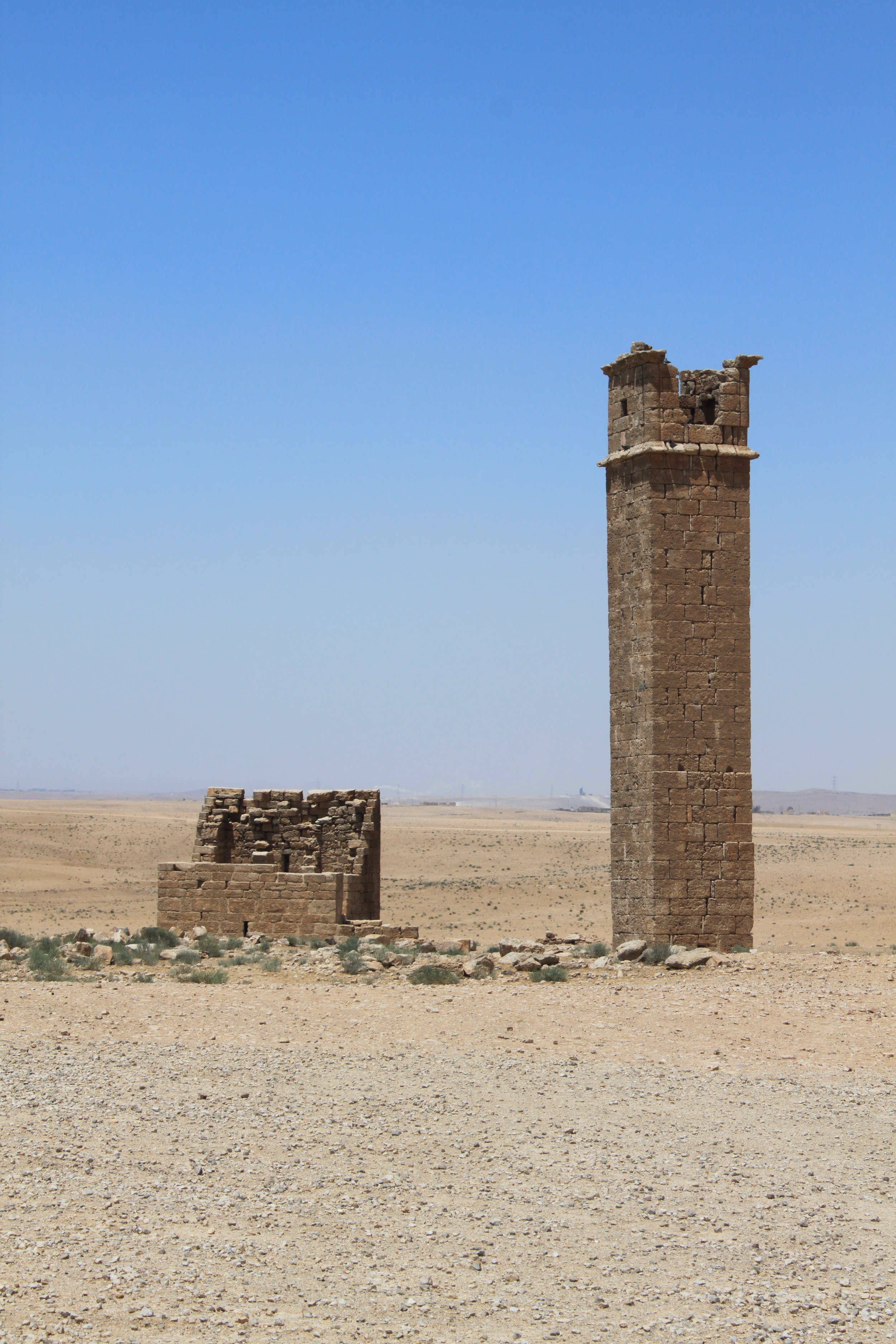
Another interesting aspect of Um er-Rasas is the Stylite tower. This tower is around 14m tall and is believed to have been used by Stylite monks as a place to live. It is believed that the monks lived in a room at the top of the tower. The entrance to the tower was not located at ground level and a ladder would have been required to access it. The tower is decorated with Christian symbols from the Byzantine era.
How do I get there?
It is not possible to reach Um er-Rasas by public transportation. The closest city to Um er-Rasas is Madaba where it is possible to arrange a taxi. If you are driving, the distance from Madaba to Um er-Rasas is around 30 km and the journey takes about 40 minutes. Um er-Rasas is an included attraction with the Jordan Pass. Without the Jordan Pass, the entrance fee is 3 JOD. If you aren’t able to visit Um er-Rasas, you can visit the site using Google Maps.
Wadi Rum Protected Area

Wadi Rum Landscape - Photo taken by our guest Hilda Berenice Hernandez Ramirez from Mexico.
What is it?
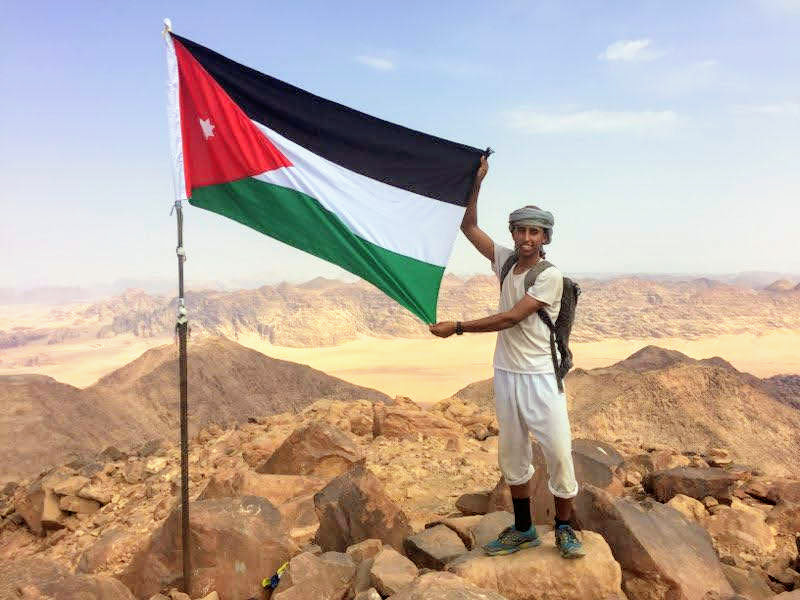
Our guide Raid Abdullah on top of one of Wadi Rum’s peaks. Photo taken by our guest Cristi Trufas from the USA.
The Wadi Rum Protected Area was named a UNESCO World Heritage Site in 2011 and it is the only UNESCO World Heritage Site in Jordan that meets the criteria in terms of both natural and cultural excellence. Wadi Rum is a desert area filled with a vast number of impressive geological structures including gorges, natural rock bridges, sandstone cliffs, mountains, caves, and more. Three of the tallest mountains in Jordan are located within the Protected Area. Jabal Ram and Jabal Umm Ishrin, the second and third tallest peaks, are located near to the Wadi Rum Village. Jabal Umm ad Dami is the tallest mountain in Jordan and it is located in the southern extreme of the Wadi Rum Protected Area, near to the border with Saudi Arabia.
Wadi Rum’s cultural significance comes from its collection of petroglyphs, inscriptions, and other archaeological findings made on the site. People have been living in Wadi Rum for more than 12,000 years and have left their mark on the landscape by leaving behind more than 25,000 rock carvings and 20,000 inscriptions. The inscriptions are made in four different Northern-Arabian scripts and demonstrate the transition from hieroglyphs to alphabet. The most popular inscriptions are the Anfaishiyya Inscriptions which are visited on our Wadi Rum Jeep Tour. Also, Wadi Rum is specifically mentioned in the Quran as the location where Iram, and the tribe of ‘Ad lived.
If you are planning to visit Wadi Rum, please click here to learn more about our Wadi Rum Tours.
How do I get there?

Travelling by Camel in the Wadi Rum Desert. Photo taken by Jurick Wessels, @jurickwessels on Instagram.
Wadi Rum is most easily accessed from Aqaba and Petra. The journey from Aqaba to Wadi Rum is around one hour. There is a local bus that travels between Aqaba and Wadi Rum each afternoon. If you would like to come by taxi, we can arrange a taxi for you starting at 25 JD. From Petra, there is as early morning tourist bus each day that travels to Wadi Rum. You can reserve a seat on this bus by contacting your accommodation in Wadi Musa. Taxis can be arranged for 40 JD. If you are coming from somewhere else in Jordan, or from the Wadi Araba Border Crossing with Eilat, please send us a message and we will let you know your options for getting to Wadi Rum.
Wadi Rum Nature Tours offers tours and accommodation in the Wadi Rum Desert, a UNESCO World Heritage Site in the south of Jordan. If you are planning a trip to Jordan, click here to read about our tours and our accommodation in beautiful Wadi Rum.
Five Must-See Places on Your Trip to Jordan
For our first article, we’ve decided to write about our top five destinations to visit in Jordan. Of course, there are many great things to do in Jordan that didn’t make the list, but we believe that this list is a great starting point for people who are trying to plan their trip. We have included lots of links in this article so that you can read more about whatever piques your interest. We hope you enjoy :).
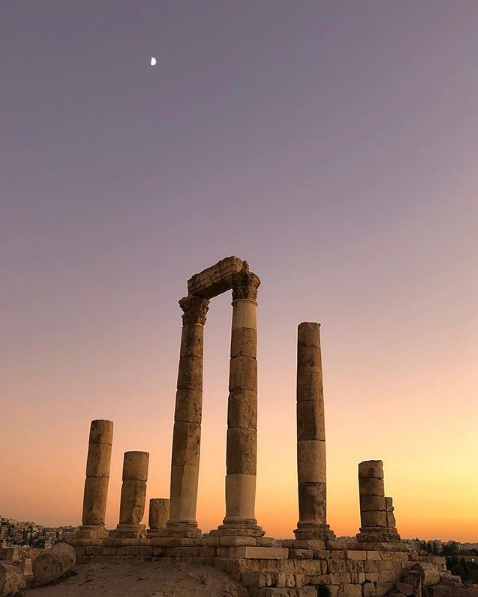
Temple of Hercules, Amman Citadel. Photo taken by Adnan Ahmed, @adnanahmed9 on Instagram.
At Wadi Rum Nature Tours, we’ve decided to start writing blog posts which help our guests plan their visit to Jordan. This is our first ever post! If you have any questions about the information that you see in our articles, or you have an idea for an article, please send us a message. We hope you find this article helpful when you are planning your trip to our country.
For our first article, we’ve decided to write about our top five destinations to visit in Jordan. Of course, there are many great things to do in Jordan that didn’t make the list, but we believe that this list is a great starting point for people who are trying to plan their trip. We have included lots of links in this article so that you can read more about whatever piques your interest. We hope you enjoy :).
The Wadi Rum Desert

Unsurprisingly, Wadi Rum is our number one place to visit in Jordan. When you visit Wadi Rum, you get a perfect combination of natural beauty and Bedouin hospitality. It is the best place to experience breathtaking desert landscapes and also learn a bit about the Jordanian and Bedouin culture. Wadi Rum is the best place to try unique Bedouin cuisine and to meet people who still live a nomadic lifestyle. If you come to Jordan, there is no doubt that Wadi Rum has to be part of your itinerary!
Wadi Rum is also known as the Valley of the Moon and it is the largest wadi (valley) in all of Jordan. Today, the Wadi Rum Protected Area covers an area of 720 km2 and is a UNESCO World Heritage Site. Wadi Rum is known for its towering sandstone cliffs, imposing sand dunes, wide valleys, ancient petroglyphs and inscriptions, and of course, the friendly local people!
The most popular way to explore Wadi Rum is by Jeep however, this is not the only way to explore our desert. You can also visit the sites on the back of a camel or you can hike, scramble, or go rock climbing on the many mountains found in Wadi Rum. If you have the time to stay overnight in the desert, you can sleep in a Bedouin camp (you can see some photos of our camp here) or you can sleep in the open air under the starry desert sky. The lack of light pollution in Wadi Rum makes it a perfect destination for astrophotography.
Several popular Hollywood films have been filmed in Wadi Rum including Lawrence of Arabia with Peter O’Toole, The Martian with Matt Damon, and Rogue One: A Star Wars Story. Wadi Rum is a popular filming destination for movies which take place in outer space due to the similarities between the landscapes in Wadi Rum and on Mars.
“I was in awe of that place. It was really, really special. One of the most spectacular and beautiful places I have ever seen, and like nothing I’ve ever seen anywhere else on Earth.”
Wadi Rum is easily reached from Aqaba, Petra (Wadi Musa), and from the Wadi Araba Border Crossing with Israel. From Aqaba, there is a daily local bus which makes one trip to Wadi Rum each day. From Wadi Musa, there is a tourist bus which departs each morning and arrives in Wadi Rum around 8:30 AM. We can arrange a taxi to Wadi Rum for you from anywhere in Jordan. Let us know your transportation needs when you make a booking, and we will tell you everything that you need to know.

Petra
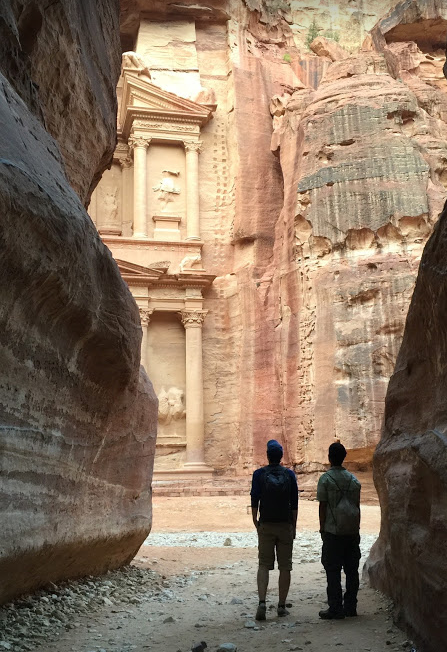
Petra is an absolute must-see for anyone visiting Jordan. According to the Jordan’s Ministry of Tourism & Antiquities, over 620,000 tourists visited the ancient city in 2017 making it by far the most popular tourist destination in Jordan. In addition to being a UNESCO World Heritage Site, Petra was named as one of the New7 Wonders of the World in 2001 along with other famous places like Chichen Itza in Mexico and the Taj Mahal in India.
Petra was an ancient city built by a group of people called the Nabataeans. The Nabataeans were an Arab people and Petra was an important location for the caravan trade. It is believed that Petra was built in the 4th century BC however by the beginning of the Islamic Era, the city was more or less abandoned with only a handful of Bedouins living inside. Petra was unknown to the Western world until 1812 when it was rediscovered by a Swiss explorer pretending to be an Arab.
Even today there are new secrets being uncovered at Petra. In 2016, archaeologists used satellite technology to discover a monumental structure that is estimated to be around 2150 years old. Petra has also featured in a variety of popular Hollywood films. You may recognize The Treasury as the entrance to the temple holding the Holy Grail in Indiana Jones and the Last Crusade.
The Petra Visitor Center is located on the edge of a town called Wadi Musa, which is where most tourists stay when they are visiting Petra. There is a tourist bus that leaves Wadi Musa each morning before 7:00 AM and comes to Wadi Rum. After arriving Wadi Rum, the bus returns to Wadi Musa around 9:00 AM. If you do not have your own vehicle and you want to travel between Wadi Musa and Wadi Rum in the afternoon, please let us know and we can arrange a taxi for you.
Author’s tip: The Treasury at Petra can become quite crowded during the day when the tour buses arrive from Amman and Israel. If you wake up early, you can enter the site at 6:00 AM and you will feel like you have the entire city to yourself.

The Royal Tombs at Petra. Photo taken by Mithun Bhandary, @drmik666 on Instagram.
The Dead Sea

Floating on the Dead Sea. Photo taken by Joe Parker, @joe.xplores on Instagram.
The Dead Sea is a unique destination located on the border between Jordan and Israel. The shores of the Dead Sea are located more than 430m below sea level, making it the Earth’s lowest point on land. The Dead Sea gets its name due to its high salt content. The amount of salt in the water prevents any fish or plants from living in the water.
Swimming in the Dead Sea is an interesting experience as due to the high salt content, you will float very easily. The water also feels greasy on your skin which can be a bit strange when you are experiencing it for the first time. The mud along the shoreline is thought to have many health benefits and people often cover their skin in this mud before or after they go for a swim.
If you are visiting the Dead Sea, there are a number of interesting sites nearby that you can also easily visit. Mount Nebo is a site that is mentioned in the Bible as the place where Moses had a view over the Promised Land. It is a 15 minute drive from the Dead Sea and you can have a great view over the Holy Land and the Jordan River Valley. Bethany Beyond the Jordan is a place that archaeologists believe is the baptism site of Jesus Christ by John the Baptist. The site is about a 10 minute drive from the Dead Sea and there are guided tours available. Other nearby sites that you might like to visit include the Dead Sea Museum, the Mujib Nature Reserve, and Lot’s Cave.
There are nine international hotels on the coast of the Dead Sea on the Jordanian side if you are planning to spend the night. It will take you more than four hours to drive to the resort area of the Dead Sea from Wadi. The Dead Sea is much more accessible from Amman. The drive from Amman to the Dead Sea is about one hour.
Author’s tip: The Dead Sea can be a bit dangerous if you are not careful. The shoreline can be a bit jagged so you must wear proper footwear. Also, the water is so salty that you must try to not get any in your eyes. If you do, it is better to let your tears do the work than to rub your eyes with your hands.
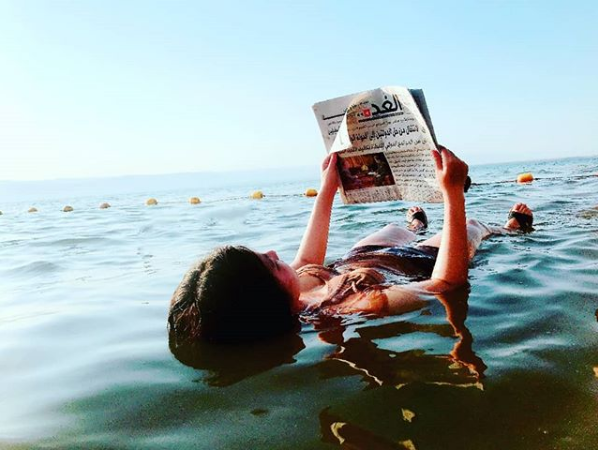
Relaxing in the Dead Sea. Photo taken by @eldora0x0 on Instagram.
Jerash

Hadrian’s Gate in Jerash. Photo taken by @asifaa on Instagram.
Jerash is an archaeological site located to the north of Amman and today it is considered one of the most well-preserved sites of ancient Roman architecture outside of Italy. Today, Jerash is the second most visited tourist destination in Jordan, with over 250,000 visitors in 2017.
When you walk around the ancient city, you can see a variety of ruins that were very important to the city many centuries ago. Some interesting sites include the Hippodrome, once the smallest hippodrome in the Roman Empire, the Temple of Artemis with it’s impressive pillars still intact, and the Oval Plaza, an asymmetrical plaza surrounded by 160 Ionic columns. When you enter the site, you will enter through Hadrian’s Arch. This arch was built in 129 AD in preparation for an imperial visit and now acts as the southern gate to this fantastic historical site.
You can easily reach Jerash by car from Amman. The journey takes between 60 and 90 minutes. A very cost effective way to visit Jerash is to take a bus from the Tarbabour Bus Station in Amman. A one-way ticket should only cost around 1 JOD. If you are planning a day trip from Amman, Jerash is not too far from other historical sites like Ajlun Castle, Pella, and Umm Qais.
Author’s Tip: The entrance fee to Jerash is 10 JOD but you can enter for free with the Jordan Pass. The Jordan Pass will save you money even if you are only planning to visit Petra and you require a visa-on-arrival to enter Jordan.
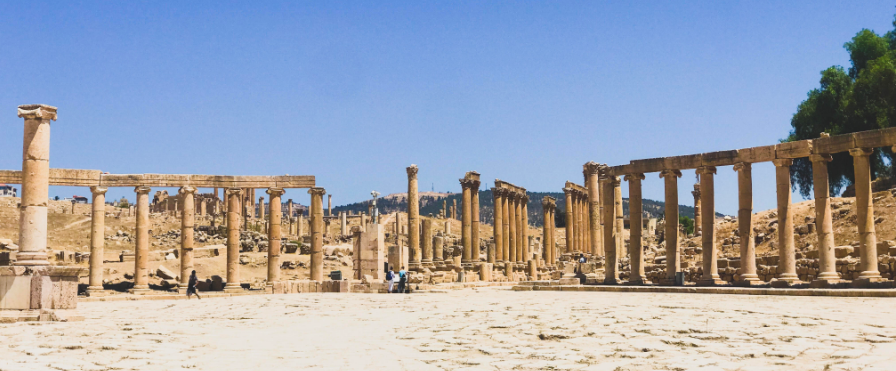
Jerash. Photo taken by @asifaa on Instagram.
Amman
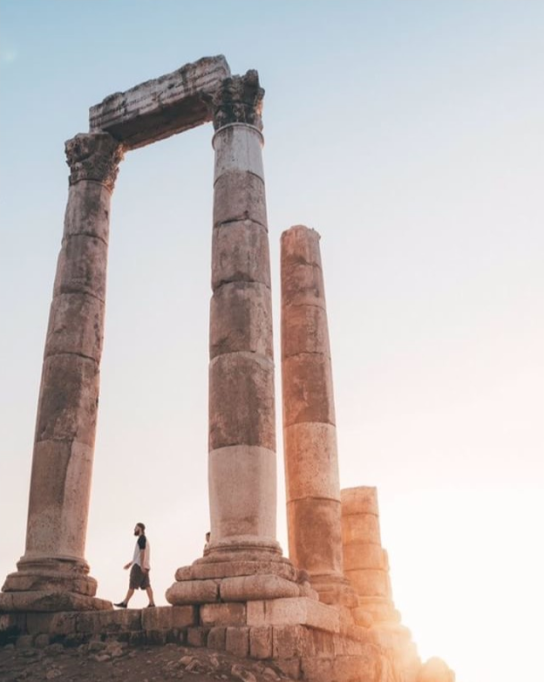
The Temple of Hercules at the Amman Citadel. Photo taken by Joe Parker, @joe.xplores on Instagram.
Despite being the capital of the country, Amman is often overlooked as a tourist destination. Amman is by far the largest city in the country and it contains more than 40% of the country’s entire population.
Two important historical sites in Amman are the Roman Amphitheatre and the Amman Citadel. The Roman amphitheatre seats 6,000 people and it is a symbol of the city. It was built in the 2nd Century AD when the city was known as Philadelphia. The Amman Citadel has a number of interesting ruins including the Temple of Hercules and the Umayyad Palace.
In Amman, you can also visit The Jordan Museum. This museum was built in 2014 and it is the largest museum in Jordan. The museum has some very important historical artifacts such as some Dead Sea Scrolls, a copy of Mesha Stele, and the statues of 'Ain Ghazal, thought to be some of the oldest statues ever discovered, dating back to around 7000 BC.
Amman is a great starting point for day trips to some of Jordan’s lesser known tourist sites like Qasr Amra (a UNESCO World Heritage Site), Azraq (a historic wetland), and the Desert Castles of Jordan, a series of castles located in the remote eastern part of the country.
Author’s Tip: Visit the Amman Citadel at sunset. Not only will you have fantastic views over the city in all directions, but you will also get to hear a call to prayer echoing from each mosque located in downtown Amman. This is an auditory experience that should not be missed!

The Roman Theater in Amman. Photo taken by @fedeworld on Instagram.
Wadi Rum Nature Tours offers tours and accommodation in the Wadi Rum Desert, a UNESCO World Heritage Site in the south of Jordan. If you are planning a trip to Jordan, click here to read about our tours and our accommodation in beautiful Wadi Rum.